This used car market research Bremer IA guide presents local insights that help shoppers compare vehicles with confidence. It brings together recent pricing tendencies, supply trends around Waverly and nearby communities, and practical steps for evaluating value. You will find tips for estimating a fair price, gauging total cost of ownership, and spotting the best times in the year to buy. To complement the research, the used-inventory page shows what is currently available, while sold-inventory provides a sense of recent sale prices and velocity. If financing is part of the plan, regional financing pages listed below outline options that fit a wide range of credit situations. For deeper reading, blog articles and county research pages expand on specific segments and strategies. Use this page to compare body styles, mileage bands, trim levels, and model years so that the final choice fits your budget, commute, and seasonal driving needs across Bremer County.
The Bremer County market typically reflects broader Iowa patterns with seasonal inventory shifts and price movements tied to weather, tax refund timing, and model-year changeovers. Shoppers can review data driven tips below, then reference used-inventory for live options and sold-inventory for context on recent transactions. Helpful county research links offer quick comparisons across nearby areas, and financing resources explain down payments, rates, and term structure without pressure. This page is designed to make research simple and transparent.
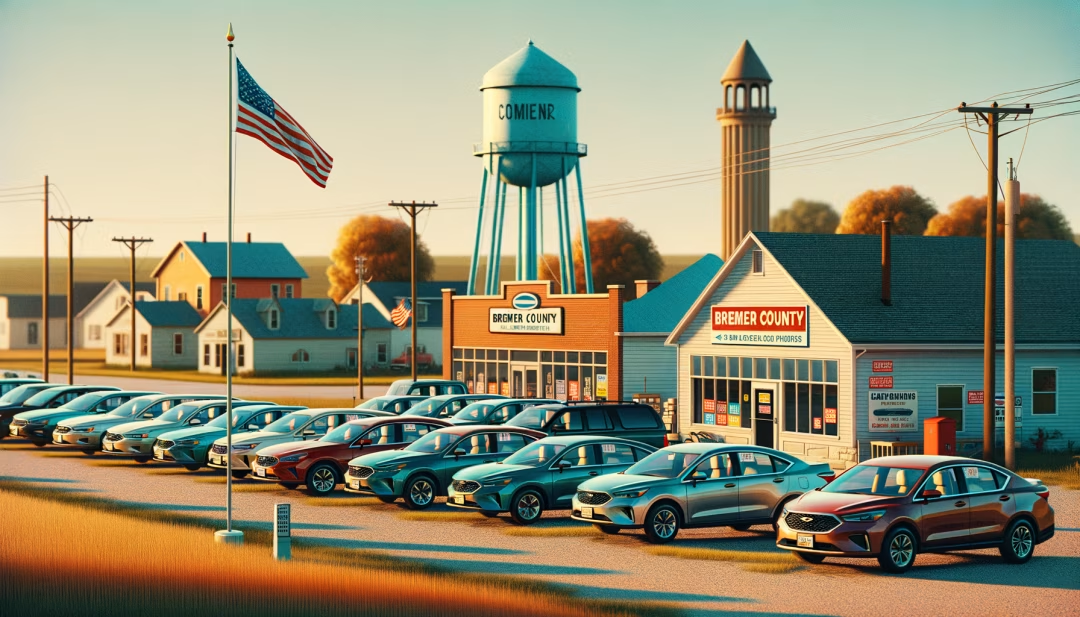
Bremer County serves a mix of rural drivers, families, and students commuting to and from nearby hubs like Waverly and Waterloo. That mix typically creates steady demand for reliable sedans, crossovers, minivans, and half ton pickups. Inventory often concentrates around practical models with strong ownership costs, while specialty trims rotate more slowly. The market also benefits from vehicles coming off lease or trade from regional metros, which can create brief windows of opportunity during model-year turnovers.
Local prices reflect multiple inputs. Supply from trade ins and lease returns raises selection for 2 to 4 year old vehicles. Seasonal preferences increase SUV and AWD interest in late fall and winter. Fuel price changes can nudge demand toward efficient compact cars or hybrids. Finally, lending conditions affect monthly-payment shoppers, shifting interest toward models that align with favorable terms and insurance costs. Watching these inputs together helps set realistic target prices and timelines.
A practical approach blends comparable listings, recent local sales, and condition adjustments. First, locate 3 to 5 close matches by trim, drivetrain, mileage, and condition using used-inventory and nearby market listings. Second, scan sold-inventory to see which models moved quickly at which price points. Third, apply adjustments for service history, tire depth, brake life, and features such as advanced safety suites or towing packages. The goal is to create a price corridor rather than a single exact figure. If you are financing, compare your estimated price corridor to payment ranges in regional financing guides listed below.
Price is only the first step. Total cost of ownership should include insurance estimates for your ZIP code, local tax and registration, fuel efficiency for your commute distances, maintenance cadence for the model, and projected depreciation for the next three years. Buyers who track these items often find that a mid trim model with complete records can outperform a lower price base model that needs immediate tires, brakes, and fluids. Reviewing the service history and scheduling a pre purchase inspection can reduce surprises and stabilize ownership costs.
In this region, average annual mileage often falls between 10,000 and 14,000 miles depending on commute distance. Highway dominant vehicles may show slightly higher odometer readings but lighter wear patterns. For pricing, 30,000 to 60,000 miles typically marks a sweet spot for many mainstream models when paired with strong records. Vehicles over 100,000 miles can still be smart buys when maintenance is documented and rust conditions are controlled. Undercarriage photos, lift inspections, and evidence of recent timing belt, water pump, or transmission service are important signals in older vehicles.
Compact and midsize SUVs remain steady choices due to flexible cargo and winter traction options. Pickups, including half tons, are supported by rural needs for towing and farm tasks. Sedans remain value leaders for pure commuting and insurance costs, and they often deliver better efficiency on long highway stretches between towns. Minivans retain strong family utility and can be competitive in price per cubic foot of space. Hybrids and plug in hybrids appear more frequently than a few years ago, especially as commuters target fuel cost predictability.
Payment outcomes depend on price, credit tier, term length, down payment, and taxes. Shorter terms increase monthly payments but lower overall interest cost. Longer terms reduce payments but require more attention to maintenance budgeting through the life of the loan. If rebuilding credit is a priority, there are pages dedicated to second chance auto financing across Iowa counties. Those pages describe documentation needs and typical structures that can help align the vehicle choice with credit goals.
Road salt and seasonal temperature swings highlight specific inspection points. Look for even tire wear, brake rotor condition, and verified maintenance intervals. Inspect the underbody and wheel wells for corrosion, and check HVAC performance for both heat and defrost. Confirm 4x4 or AWD engagement on SUVs and trucks, and verify that remote start, heated seats, and other cold weather features function consistently. Lastly, review advanced driver assistance systems for calibration and dash light activity after start up.
Compact crossovers and midsize SUVs offer cargo flexibility for school, sports, and farm errands. Value oriented sedans deliver predictable commuting and lower insurance. Light duty pickups balance towing with everyday ride quality, and many include factory tow packages that add resale value. Hybrids can offset winter idle time with improved efficiency in stop and go driving through town centers. When comparing trims, look at safety features such as blind spot monitors, adaptive cruise, and lane support, which improve both daily comfort and long trip safety on Highway 3 and nearby routes.
Selection typically expands near model-year transitions and late winter tax refund periods. Prices can firm up when snowfall starts, especially for AWD and 4x4 models, while front wheel drive sedans and hatchbacks may become stronger values. Convertibles and sports cars often reach better pricing in colder months. Planning ahead by tracking inventory for 2 to 4 weeks can reveal typical discounts and incentives on your target segment.
Before finalizing, confirm the title status, lien release, and VIN on all paperwork. Review estimated taxes and registration based on county rules. A clear bill of sale with agreed upon items such as extra keys, all season or winter mats, and installed accessories helps avoid confusion later. Keep copies of receipts for any emissions or safety checks performed during the process and pair those with your maintenance log for resale value later.
Use the links below to compare inventory, read education articles, and reference nearby county trends. Each page provides additional context for pricing ranges, specific model recommendations, and financing structure examples.
A strong used car outcome in Bremer IA begins with a complete picture of local pricing, inventory cycles, and ownership costs. By forming a price corridor, confirming condition with records and inspections, and planning the right financing structure, shoppers reduce surprises and maintain budget clarity. The supporting links above provide real world listings, recent sale context, and education that align with winter driving, rural routes, and family schedules. With measured research and patience, the result is a reliable vehicle that fits daily needs and long term costs in Bremer County.